Waiting for an iPhone revolution doesn t make sense anymore. We are looking in the wrong direction
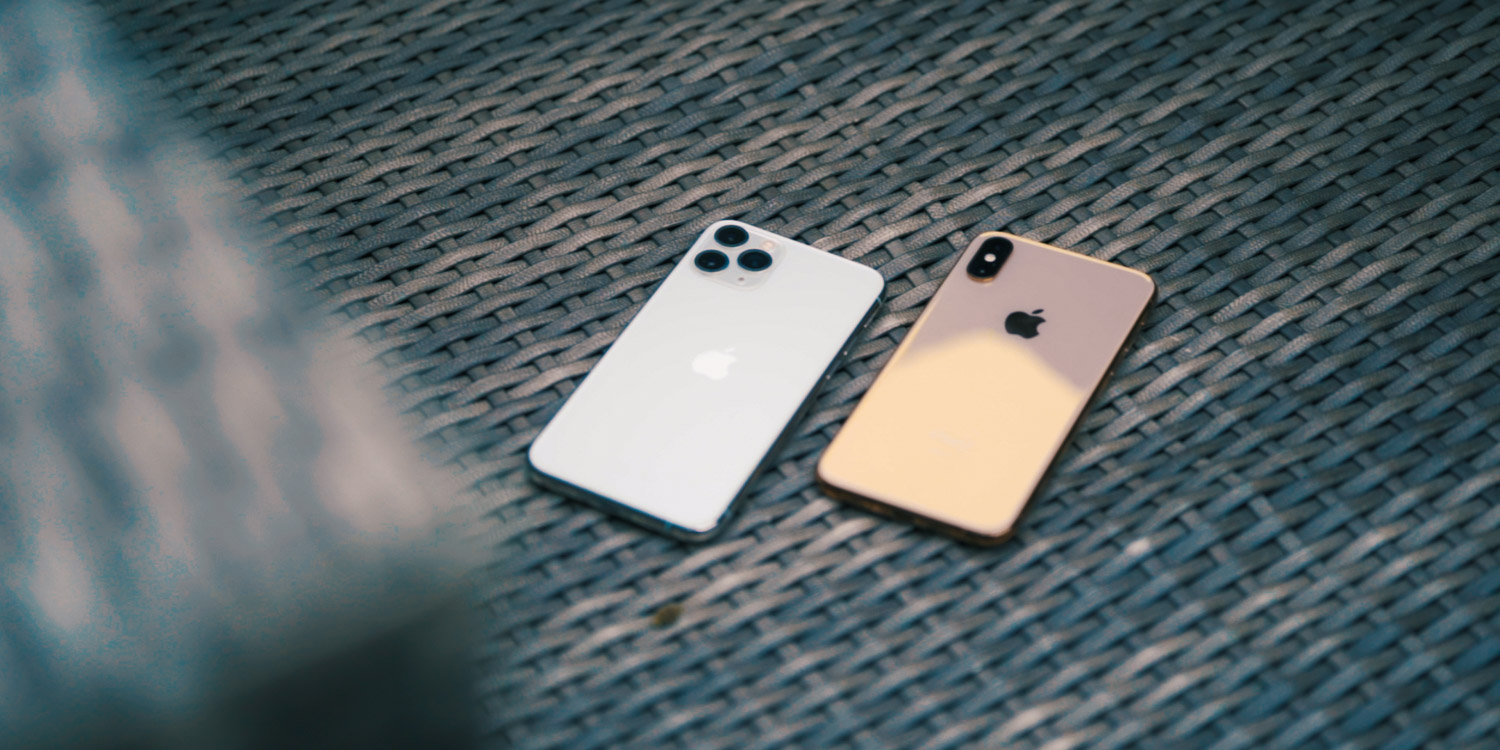
Yesterday Przemek rightly noticed that the world of electrogadgets is becoming boring. And that waiting for the next iPhone becomes frustrating to say the least for a tech enthusiast. Agreed, but not entirely. There is still a lot going on in consumer electronics. Although it is not actually visible with the naked eye.
When was the last time you were blown away by an electronic product? But he was seriously delighted. Not that it’s cute or very fast. I’m asking you about something like that, when you finally used it, you came to the conclusion that the world has just changed a bit. In my case, there were two products.
The first was a fitness band , although it was more about the functions of a smart watch. Since I put my wonderful mechanical Aviator in a drawer, my everyday life looks completely different. I reach for my phone incomparably less often, because a glance at my wrist (and the notification displayed on the watch) is enough to let me know that I don’t have to.
The second was the HoloLens goggles. These worlds have not (yet) changed, because it has turned out that transforming the huge work goggles into a slim, light and consumer-friendly product is a challenge so far beyond the engineers’ strength. HoloLens or their competitor will make the watch no longer needed. Everything we need will be displayed directly in front of us.
One half a decade ago, the other failed. Well, in fact, revolution after revolution.
Not that the consumer electronics market is in any way bad. Billions of gadgets find new buyers every year, tempting with more and more stylish forms, more and more computing power or more and more independence from wired power. But do you remember the last product of this type, such as the so-so-so-called subversive iPhone ? Something besides a smart watch?
In fact, you get the impression that the world of consumer electronics is kind of boring. Where are these experiences, like the premieres of the new Lumia , whose cameras were supposed to make us put our SLRs away? Where are those thrilling lawsuits where it was considered whether unlocking the phone with a horizontal finger movement was a patent worthy invention? Remember how much confusion the 9.7-inch iPhone iPad caused? Where is it all?
Maybe it’s because consumer electronics has become a mass product – not for enthusiasts and professionals.
A 7-year-old girl from a 45-year-old nerd is more efficient and lively today with a modern mobile phone. We no longer ask my nephew to make us a PC (and some younger readers are probably not even sure what this expression means). It is no longer the wild west and crossing new borders. Subsequent hits on the consumer market are no longer created in the garages of imaginative enthusiasts, but in research laboratories of large corporations. And before they even agree to prototyping a product, they will first conduct a focus market research on it.
There is no room for weirdness, courage and dead ends here. Here you have to follow market research, market demand and supply indicators from partners and suppliers. A step aside and losing focus even for a moment means giving up the field of powerful competition. And a sloppy opportunity to recover it … if, at all, survival was an option after a failure.
Does this mean that the famous Silicon Valley is boring? Could the nerds come back to venting their fantasies with Dungeons & Dragons sessions, instead of designing another world-changing invention in their imaginations? Will it always be as boring as Przemek is afraid of ? I have good news. The nerds are alive and well. Their forge only slightly changed its character. We only need to play detectives for a while to spot her. And pay attention to the last consumer electronic megahit, which we could forget for a moment – because it so happens that it has not arrived in Poland yet.
Hey Alexa , tell me some interesting story.
For as long as I can remember, enthusiasts of new technologies have dreamed of being able to talk freely with the machine. That she would be able to do something more than just perform a predefined and simple action on a voice command spoken in an appropriate form and intonation. However, when we finally got it – and in such an accessible form as Siri on the iPhone – it turned out that we usually prefer the touch interface. We got so used to him that the idea of talking on the phone turned out to be so strange.
For a long time, intelligent voice assistants seemed to be a dead end of development. Technology that sounds nice as an idea but that doesn’t really do the job. A company that no one suspected of such intentions paved the way to the hearts of consumers for this new technology. The key to success was a product that was affordable, functional and of high quality. And which, above all, offered no other form of operation than via a voice interface. I’m talking about the Amazon Echo speaker.
A cheap and decent sounding loudspeaker from a well-known seller ensured the Echo was sold properly. The only form of interaction through voice commands, in turn, finally overcame our shame about talking to inanimate matter. Today, almost everyone tries to replicate Amazon’s success. The market is full of speech-understanding electronics.
We can talk to the TV, car, personal computer. Not yet in Poland – our language is difficult to learn by a machine due to its complexity, logic and phonetics, and due to our low wealth, global corporations are not eager to inculcate it in their products. In these rich markets, however, we won’t impress anyone by saying aloud Hey Alexa, dim the lights in the living room and turn on Spotify jazz in the A lounge and one more thing: order dog food and the results. It is as natural and common as using the telephone to read rather than to make calls.
There is no piece of hardware responsible for the success of the Echo and everything that follows.
It lacks the innovative capacitive display that made the multi-touch revolution that the iPhone carried with it. There is no interesting NFC radio technique in it, thanks to which we will pay for purchases in the store with a watch. The Echo is a decent speaker, simple processor, and pretty good, but by no means innovative microphones. All of Echo’s innovation lies in Alexa’s assistant. So a piece of clever software, the lion’s share of which is processed in the cloud.
Amazon’s impressive achievements in the development of cloud computing, data analytics and AI algorithms have made Alexa so intelligent . Once we see this, I suggest a thought experiment.
Let’s stop thinking of technology as a physical product. It is not easy, after all, the proper meaning of the word technology describes the manufacturing process. When we stop looking for another Apple Watch or PlayStation on the market and look at what Silicon Valley and its counterparts in other countries are doing today, I think we will quickly change our mind.
Because here technological breakthroughs happen every now and then.
Telephones prepare training and diet plans individually tailored to our needs. We can talk to a foreigner voice and live, and Skype on the fly will translate what the other person is saying. PowerPoint analyzes our presentation, paying attention to whether or not we are boring. Furniture from Ikea can be created virtually for our apartment and check whether we like it and whether it will fit in it. Our electronic banking system will tell us that if we keep the expenses at the same level, we will not be able to save for a new Xbox by the end of the month, although we can buy a photo book with the most charming photos of our pooch. Google photos looked through several thousand photos from our camera, chose the best ones and composed them nicely into a book album.
We are reluctant to see the above as breakthrough inventions, because the texts in which we read about them are full of phrases such as cloud , fifth, artificial intelligence and similar. We associate these with boring solutions for corporate clients, databases, big data or business analytics. This habit is also worth changing, because the corporations that follow maximum optimization invest huge money in innovation – and very often, before new inventions reach thatched roof, they are first used by large companies that have an interest in investing in their development.
A bit of an accelerated lesson of this was learned quite recently, when the coronavirus pandemic forced employers to send employees home. Microsoft Teams , Zoom , VMware , IBM Cloud , Cisco WebEx – until recently these names did not say much to a significant part of consumers. Today they already know that thanks to technology, they can connect to their work computer and all applications even with the help of a cheap Android tablet – thanks to remote desktop and virtualization techniques. And that modern technologies make the necessity to provide a physical workplace absolutely unnecessary for many positions.
If this isn’t a technological breakthrough, then I don’t know what else could fit that category.
It is also worth noting the dizzying pace of these innovations.
To give this statement a proper perspective, I would like to point out that just three years ago, saying aloud OK Google, turn on Brian’s Life on Netliks in the bedroom would not turn on the second TV with our movie, and open a Google search with the above phrase typed in to the word in the form. And you know what all these inventions have in common? They are almost completely independent of the equipment we use.
Electronics is evolving to be invisible faster and faster. Even a mobile phone aims to be a piece of glass, a touchscreen, an interface to the Internet. Przemek is right to point out that in the world of gadgets for nerds – and in general in mass consumer electronics in general – things get boring. I just want to add that it’s time to look the other way.
Over the last several months, thanks to Stadia and GeForce Now, we have transformed almost every phone into an efficient game console. Our watches have learned to call for help if we suddenly become unconscious. A modern car is able to drive most of the route on its own, and to solve a math homework equation, you just need to take a picture of it – the rest, with step-by-step illustrations of how to calculate it, will be handled by an app on your phone.
While waiting for a new revolutionary device, we can actually get bored and actually be disappointed. Nothing new awaits us soon, well, potentially, except for Apple Glass . This, however, does not mean that nothing is happening or that little interesting is happening in new technologies. We have to come to terms with the idea that innovation has become less… um… romantic?
5G, cloud computing and machine learning do not sound as inspiring as the famous garage where Jobs and Wozniak started. Modern innovation is an intangible, immaterial abstraction with which we interact with our finger on a touch screen. The main thing is to accept the fact that it does not matter what device this touchscreen is in. It doesn’t matter anymore. Do you know what the new iPhone will be like? Just don’t tell anyone, it’s a secret: it will have a better camera, a more powerful battery and a more efficient processor. It will probably be a bit slimmer as well. And do you know what new application on this iPhone will change our everyday life once again? I have no idea. And I can’t wait to find out about it.
Waiting for an iPhone revolution no longer makes sense. We are looking in the wrong direction
from WordPress https://ift.tt/3jP02ce


Comments
Post a Comment