A black hole about the size of a grapefruit and ten times the mass of Earth. There will be searches in the solar system
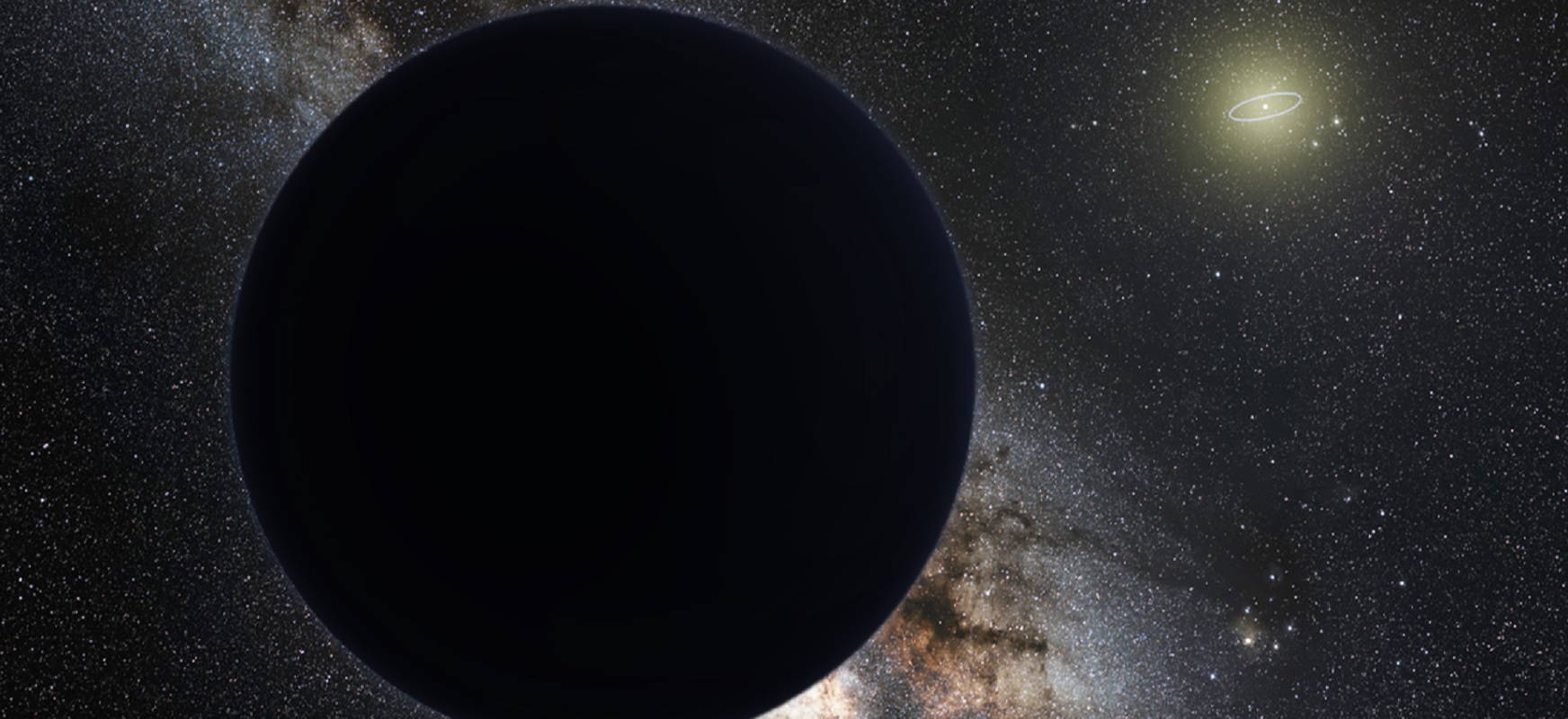
For several years, astronomers have suspected that there is another massive object in the solar system that no one has not seen before. Now, however, they have a plan on how to check if there is another planet with a mass of 5-10 Earth masses behind the orbit of Neptune, or a small … black hole.
For several years, astronomers have been observing the peculiar behavior of the cluster transneptunal objects (TNO). The elongated orbits of these objects seem to indicate the presence of one more massive object in the outer solar system that gravitatively affects them. Calculations indicate that all these orbits could be explained by the presence of the massive ninth planet of the Solar System. This hypothetical planet, the so-called Planet 9 would orbit the Sun hundreds of times greater than the Sun-Earth distance.
Of course, this is an original and controversial theory, which is why some scientists are inclined to attribute the peculiar behavior of TNO to a cluster of much smaller cosmic rocks. Others, in turn, opt for a planet five times the mass of Earth, orbiting 400 astronomical units from the Sun (1 astronomical unit (AU) is the average distance between the Earth and the Sun, i.e. around 150 million km).
The latest theory, however, says that Planet 9 may in fact be a very small black hole that is a remnant of the Big Bang. Unfortunately, the size of such a black hole – 5 cm in diameter – would make it impossible to discover it with any telescope.
Over the past few years, many alternative explanations have been created for the unusual orbits that characterize some of the small Solar System objects. One of them says that Planet 9 is actually a black hole about the size of a grapefruit and a mass of 5-10 masses of the Earth – says Amir Siraj from Harvard University.
How is it actually
In the latest article approved for publication in The Astrophysical Journal Letters, Siraj, along with other astronomers from Harvard and the Black Hole Initiative, describe a new method that may ultimately determine what we’re dealing with.
According to researchers, you should look for accretion flares that should appear when a black hole devours the surrounding matter. If such flashes can be recorded, then we will know that we are actually dealing with a black hole.

Near the black hole, small bodies approaching it will be melted by the heat from the accretion of gas from the interstellar medium to the black hole. Because the black holes themselves are dark, the only chance to see them is the radiation emitted by the matter approaching them
– adds Avi Loeb, professor of astronomy at Harvard.
To conduct the research, astronomers plan to use the upcoming LSST (Legacy Survey of Space and Time) mission, which will be carried out at the Very C. Rubin Observatory in Chile. Astronomers involved in the mission will be looking for information about dark matter and dark energy, but will also be prepared for the study forming processes and planetary properties in our planetary system.

LSST will have a very wide field of view and will observe the entire sky many times, looking for temporary phenomena such as flares. Most telescopes are adapted to observe known targets, but unfortunately we do not know where to look for Planet 9, we only know the vast region where it should currently be.
According to Loeb, the unmatched sensitivity of LSST instruments will allow researchers to see even the smallest flares.
An alternative solution is much more difficult
LSST, however, is not the only offer of seekers of the ninth planet of the solar system. A few months ago, a completely different team proposed to send a fleet of thousands of nanosensors towards a potential object that could approach it, change the direction of flight slightly under the influence of its gravity, which in turn could be registered on Earth.
Unfortunately, the above proposal is still very futuristic, and the costs of its implementation would certainly exceed one billion dollars, if we were able to develop the technology necessary for its implementation.
A black hole about the size of a grapefruit and ten times the mass of Earth. There will be searches in the solar system

from WordPress https://ift.tt/2ZpqVLL


Comments
Post a Comment