There can be a lot of water worlds in our galaxy. Such without Kevin Costner
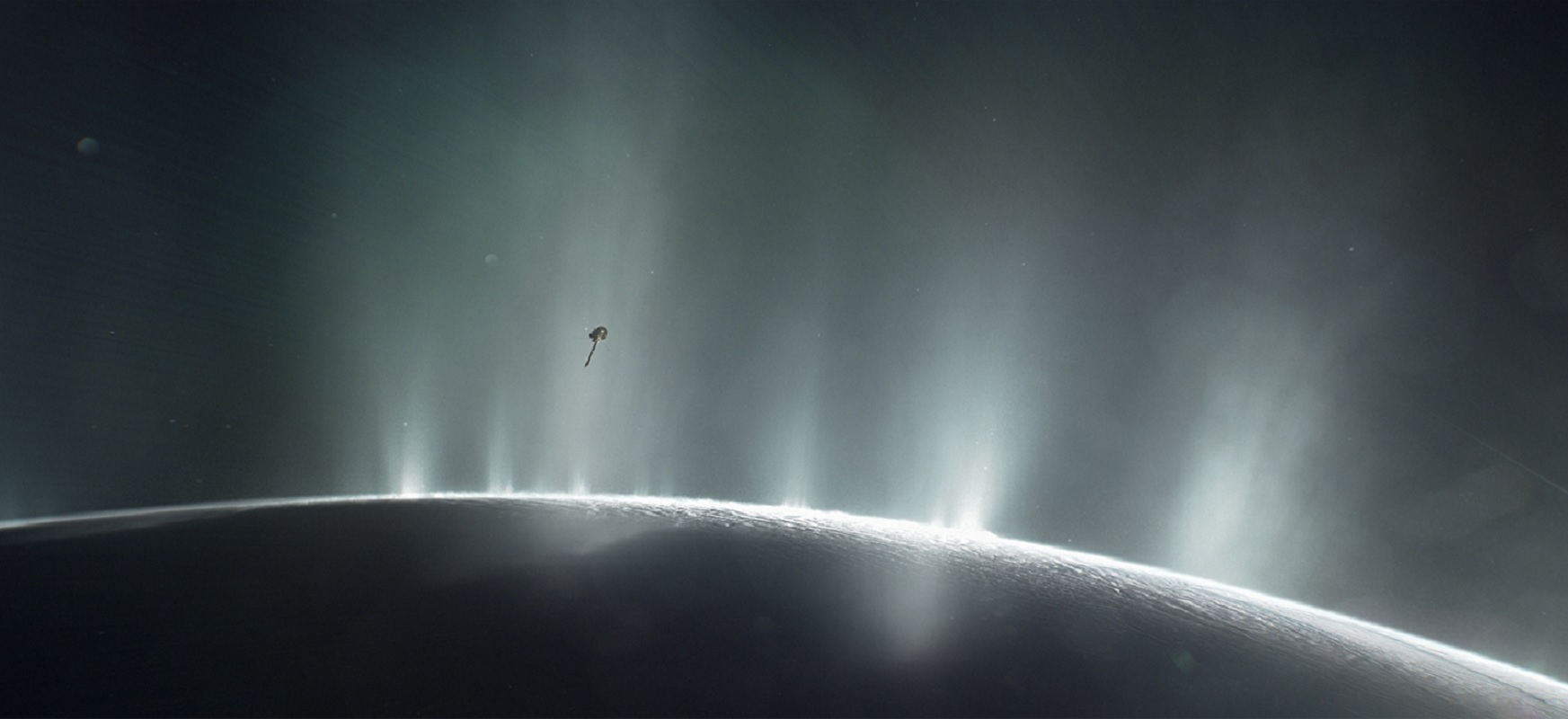
A few years ago, astronomers began to wonder if any of the more than 4,000 exoplanets already discovered could resemble ice moons with subsurface oceans such as Enceladus or Europe orbiting gas giants in the solar system. Although both of these moons do not have their own atmosphere and are completely covered with ice crust, they are still the best places for seekers of extraterrestrial life in our planetary system.
Geysers gushing from the surface of Europe and Enceladus indicate that under their surfaces are oceans of liquid water and, moreover, both of these objects have in themselves some source of energy that drives these geysers. These two elements: liquid water and an energy source are the basic two requirements for the creation of life as we know it – says the planetary scientist Lynnae Quick. If we assume that both of these moons may be conducive to the creation of life, then perhaps their larger counterparts in other planetary systems also conducive to the emergence of life.
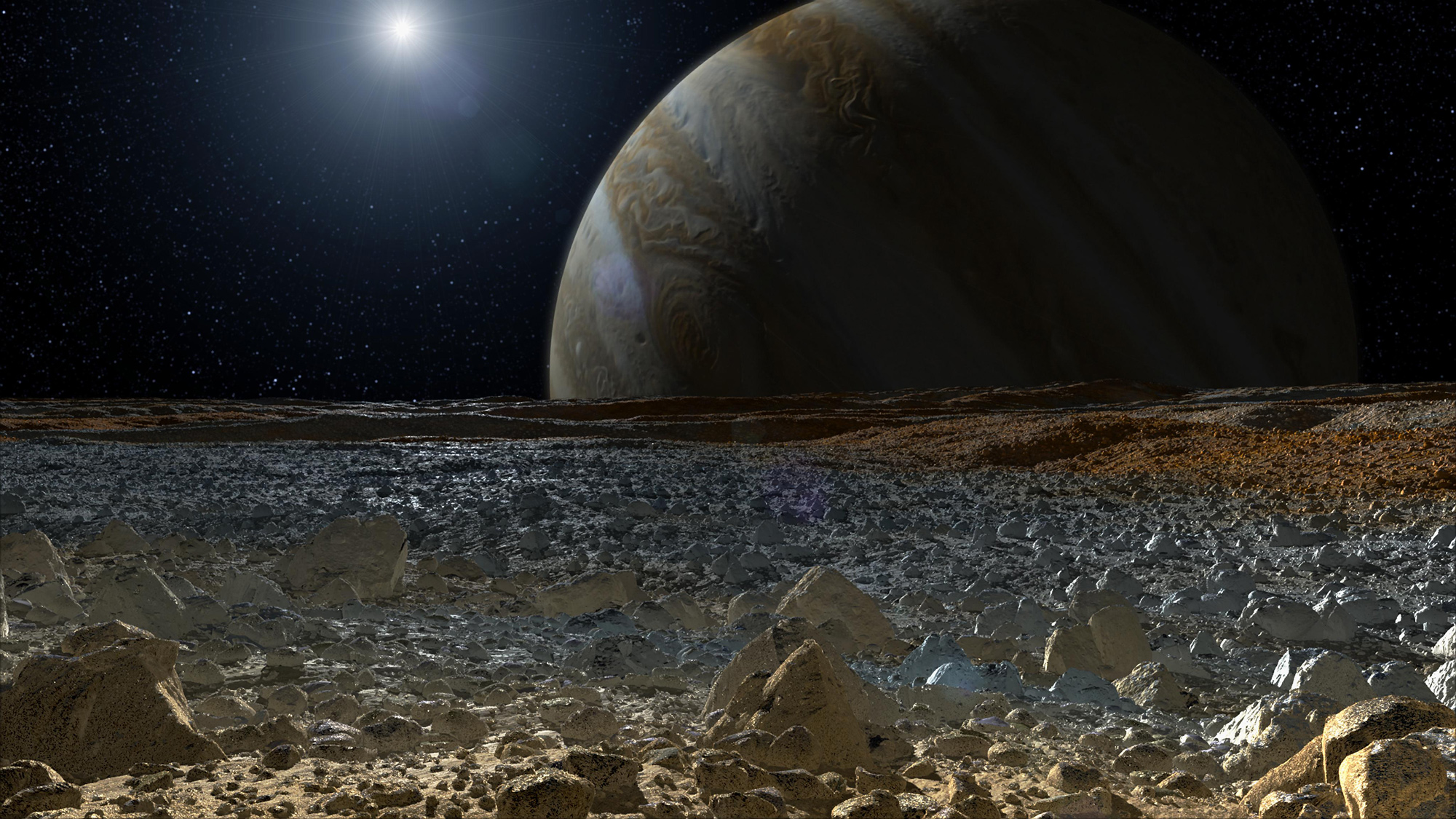
Quick decided to check whether there might be planets resembling Europe and Enceladus in the Milky Way purely hypothetically, and whether they can also have geological activity that allows geysers to exist on the surface, which in the future could be detected with new telescopes
Mathematically analyzing dozens of planets, including the famous planets of the nearby planetary system TRAPPIST-1 , Quick and colleagues came to a surprising conclusion: more than 25 percent of the planets analyzed can be water worlds. Most of them probably have oceans under the ice crust, as is the case in Europe or Enceladus. Furthermore, many of these planets can emit more energy than these moons.

Perhaps someday in the future, scientists will be able to test the conclusions obtained by Quick by measuring the amount of heat released by the exoplanet or by detecting volcanic or cryovolcanic eruptions on the waves emitted by individual chemicals found in the atmosphere of distant exoplanets. For now, there are no technologies that allow such detailed research of such distant and such small objects. Still, based on the information they already have, i.e. size, mass, and distance from parent stars, scientists can already create mathematical models to infer whether life might or may not exist on a planet.
It is noteworthy, however, that while many of these models include information based on data from the Solar System, they allow us to determine which planets are particularly worth investigating. If the pace of discovering new extrasolar planets continues to increase, we will soon know so many of them that it will be necessary to develop processes to determine which planets are worth looking at more closely.

Earth-sized exoplanets were selected for the study
For their search for water worlds, the Quick team selected 53 exoplanets similar in size to Earth. Scientists have assumed that planets of this size are most likely solid, not gaseous, and thus liquid water may occur on or below their surface. By the way, 30 more planets matching these criteria have already been discovered since the beginning of the project in 2017, but they have not been added to this project.
After selecting the appropriate planets, the researchers checked how much heat they can generate as a result of the decomposition of radioactive elements found in the planet’s mantle and crust and as a result of tidal interactions (gravitational stretching of the planet orbiting the ellipse around its host star). Such heat is released by the planet in the form of a volcano or cryovolcano or in the form of tectonic activity, i.e. the movement of fragments of the rocky or ice crust on the surface of the planet or moon. Regardless of how heat is released, its quantity is crucial, because it will decide whether life can exist on a given planet. It is enough to note that too much volcanic activity leads to the formation of a lava flowing planet, but too little activity will inhibit the release of atmospheric gases, leaving only a dry, sterilized surface. On the other hand, adequate volcanic activity can guarantee a life-friendly world like Earth.

Over the next few years, the Europa Clipper and JUICE spacecraft will launch towards Jupiter, where they will explore Europe and other ice moons of this planet that may have subsurface oceans. The more scientists learn from this mission, the more they will know about aquatic planets outside the solar system.
Once the Webb telescope is launched …

During the upcoming missions to Europe and the subsequent Dragonfly mission to Titan, scientists will try to discover the chemical signatures of life. Quick notices that these missions will prepare us to look for similar signatures on extrasolar planets.
When the successor to Hubble, the James Webb Space Telescope, finally finds in space, he will look for chemical signatures in the atmospheres of some of the planets in the TRAPPIST-1 planet, 39 light years away. The planetary system discovered in 2017 consists of seven planets with dimensions similar to the size of the Earth. The Quick team calculated that four of them – TRAPPIST-1 e, f, g and h – could be water worlds.
All four planets can have water on their surface – this is the conclusion of scientists after analyzing the amount of heat received by each of them from the host star. Astronomers also analyzed the density of each planet and the estimated amount of internal heat released by each planet.
If the density of the planet turns out to be lower than that of the Earth, then there may be more water on it, and less rock and iron. If up to this temperature they allow liquid water to exist … we have a water world.
However, if the temperatures on the planet’s surface are lower than 0 degrees Celsius, the water freezes and then we deal with an icy water world whose density will be even lower.
Many questions in the above text are still open. Nevertheless, it can be seen that scientists are intensively preparing to use the Webb telescope, which will be able to put our current astronomical knowledge on their heads. I hope so, at least it won’t be boring.
Currently JWST is scheduled to start in the second half of 2021.
There can be a lot of water worlds in our galaxy. Such without Kevin Costner

from WordPress https://ift.tt/2Cu6BzN


Comments
Post a Comment